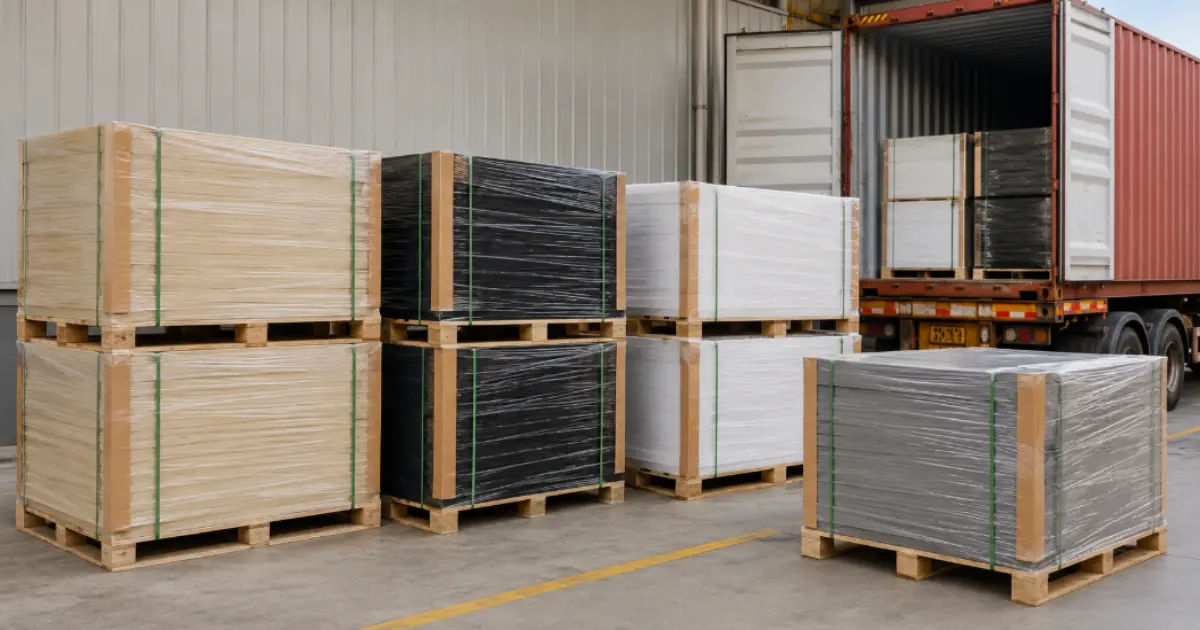
Cross-border logistics present severe environmental hazards for technical plastic sheets. Discover how strategic packaging, temperature controls, and material selection at Viethung Plastics guarantee damage-free international deliveries.
The Invisible Risks of Global Sea Freight
Procuring high-quality plastic sheets like Custom Extruded ABS Sheets from Vietnam offers substantial cost benefits. However, transoceanic shipping exposes freight to extreme conditions inside shipping containers:
- Thermal Fluctuations: Shipping containers can reach interior temperatures over 60°C in equatorial ocean routes, approaching the heat deflection point of thermoplastics.
- Abrasive Friction: Continuous vessel vibration causes sheet-to-sheet friction, resulting in micro-scratches and surface haze.
- Humidity and Moisture Rain: High humidity leads to container condensation, causing water spots, chemical discoloration, or paper liner degradation.
Implementing targeted protective measures during factory packaging prevents expensive material degradation and project delays.
Root Causes & Preventive Measures
1. Preventing Surface Scratches and Abrasion
ABS and PP sheets frequently require pristine surface finishes for vacuum forming, thermoforming, or cosmetic panels. To avoid friction damage:
- PE Protective Film Application: Co-extruded Polyethylene (PE) protective films act as a sacrificial shield against grit and friction.
- Interleaving Papers: For textured or high-gloss sheets, micro-waxed interleaving paper prevents static buildup and friction marks.
- Edge & Corner Protectors: Heavy-duty V-board paper edge protectors prevent strap crushing along pallet edges.
2. Eliminating Thermal Warping and Distortion
Plastic sheets naturally expand and contract with temperature shifts. Prevent warpage during long-distance transit through these practices:
- Fully Flat Rigid Pallet Bases: Pallets must feature zero deflection with continuous support across the bottom sheet area to eliminate sagging under heavy loads.
- Symmetrical Weight Stacking: Pallet loads are stacked evenly with heavy gauge sheets on the bottom and lighter gauges on top, bounded by rigid top boards.
- Container Desiccants: High-capacity desiccant bags absorb moisture, preventing damp air from altering paper masking moisture equilibrium.
Technical Comparison: Ocean Shipping Risk Matrix (ABS vs. PP)
Understanding physical property variations between ABS and Polypropylene helps optimize export packaging specifications:
| Property / Risk Factor | Extruded ABS Sheets | Polypropylene (PP) Sheets | Protective Packaging Solution |
|---|---|---|---|
| Surface Hardness & Scratch Risk | Medium-High (Pencil Hardness ~HB-H) | Low-Medium (Slightly softer, prone to scuffs) | Apply 50-80 micron PE protective film or anti-static film layer. |
| Heat Deflection Temp (HDT) | Higher (~85°C – 98°C) | Moderate (~75°C – 85°C) | Use full-coverage flat wooden top/bottom boards and avoid over-tensioned strapping. |
| Thermal Expansion Rate | Moderate (7 × 10⁻⁵ / K) | Higher (10–15 × 10⁻⁵ / K) | Allow expansion tolerance inside shrink-wrap; avoid overly tight banding. |
| Moisture Sensitivity | Slightly Hygroscopic | Hydrophobic (Near zero absorption) | Incorporate container-grade silica desiccants to prevent packaging moisture decay. |
How Viethung Plastics Ensures Safe International Delivery
At Viethung Plastics, we treat packaging with the same precision as extrusion manufacturing. Our standard export procedure includes:
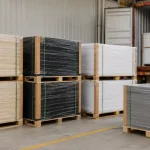
- Custom Fumigated Pallets: ISPM 15 compliant wooden pallets built specifically to match exact sheet dimensions.
- Full-Wrap Stretch Film Seals: Complete 6-side polyethylene sealing protects against seawater vapor infiltration.
- Load-Locking Strapping: High-tensile PET strapping combined with rigid plastic corner pads prevents load shifts inside container vessels.
Looking for custom extruded plastic sheets engineered and packed for global ocean freight? Contact Viethung Plastics Technical Sales Team today to request custom quotes and packaging specifications.
Frequently Asked Questions (FAQ)
Why do plastic sheets warp inside sea shipping containers?
Container temperatures during ocean transit often exceed 60°C. Coupled with uneven pallet support or tight strapping, internal stresses cause thermal expansion resulting in permanent sheet warping.
What protective film is recommended for ABS and PP sheets during sea transport?
We recommend medium-tack PE protective film with acrylic adhesives that resist degradation under high heat, leaving zero adhesive residue on sheet surfaces post-peel.
How does Viethung Plastics customize export packaging for B2B orders?
We provide tailormade fumigated wooden pallets, heavy corner protection, waterproof wrapping, moisture-absorbing desiccants, and optimized stacking patterns based on customer container loading plans.