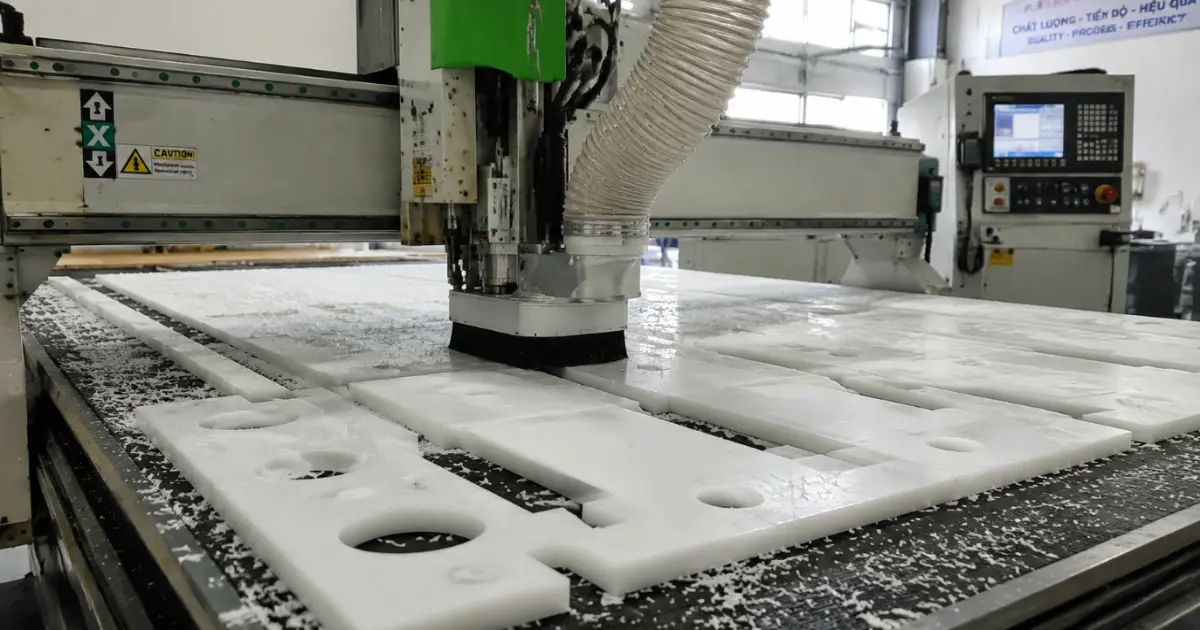
Discover how advanced nesting algorithms, specialized CNC tooling, and direct OEM plastic sheet extrusion in Vietnam helped an industrial client reduce raw material scrap, shorten lead times, and trim overall project costs.
Executive Summary: The High Cost of Material Scrap in Plastic Fabrication
When engineering components for chemical scrubbers, structural tank liners, and wet process equipment, raw material costs represent up to 60% of total component expenditure. Traditional manual cutting and unoptimized panel saw slicing often leave behind massive amounts of unusable offcuts and scrap margins.
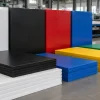
In this case study, an international equipment manufacturer required custom-shaped Polypropylene (PP) sheet components with tight tolerances. By shifting from standard manual trimming to custom CNC machined polypropylene sheets backed by automated nesting technology at our Vietnam factory, we cut raw material waste from 24% down to just 6%, yielding a net 18% total material savings.
The Challenge: High Scrap Rates & Thermal Deformation Risks
The client needed thousands of custom-shaped support ribs and mounting plates crafted from 10mm and 15mm thick Polypropylene sheets. Their previous supplier faced three major operational hurdles:
- Excessive Scrap Margins: Rectangular panel saws resulted in high rectangular offcuts that could not accommodate curved or interlocking part geometries.
- Thermal Melting & Burr Formation: Standard wood/metal CNC routers generated too much friction heat, causing soft PP plastic chips to re-weld to cut edges.
- Dimensional Drift: Internal stress in cheap PP stock led to bowing and warping after machining extensive surface contours.
The Solution: Precision CNC Machining & Intelligent Nesting
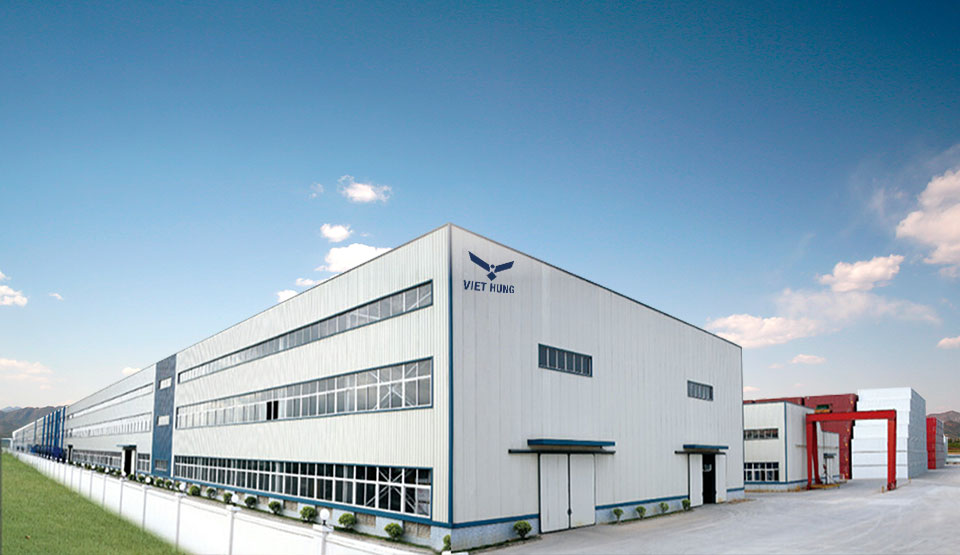
At Viethung Plastics, we integrated raw sheet extrusion with on-site multi-axis CNC routing under one roof in Vietnam. Our technical engineering team implemented a four-step optimization protocol:
1. Direct Extrusion with Stress-Relieved PP Stock
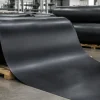
We extruded stress-relieved Homopolymer Polypropylene (PPH) stock sheets specifically formulated with low residual thermal stress, ensuring dimensional stability during heavy material removal.
2. Algorithmic Multi-Part Nesting
Utilizing high-density nesting algorithms, our CAD engineers arranged part geometries so that concave profiles interlocked with convex shapes across standard 1220mm x 2440mm and custom extruded master sheet formats.
3. Specialized Tooling & Spindle Parameters
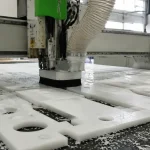
We utilized single-flute, polished carbide end mills designed specifically for thermoplastic machining. Combined with high-volume air blast cooling, this eliminated friction melting and yielded smooth, burr-free edge finishes straight off the machine bed.
4. Closed-Loop Recycling of Trim Scrap
The remaining 6% skeleton scrap was immediately granulated on-site for secondary, non-critical structural applications, minimizing total environmental footprint.
Technical Comparison: Manual Cutting vs. Precision CNC Machining
Below is a direct operational performance breakdown comparing traditional fabrication methods against custom CNC routing for industrial Polypropylene (PP) sheet parts:
| Performance Parameter | Traditional Manual / Saw Cutting | Custom CNC Machining (Viethung) |
|---|---|---|
| Average Scrap Rate | 22% – 28% | 5% – 7% (18% Reduction) |
| Dimensional Tolerance | ±1.5 mm to ±3.0 mm | ±0.1 mm to ±0.3 mm |
| Edge Quality | Rough saw marks; requires manual deburring | Smooth, burr-free finish; ready for assembly |
| Complex Geometry Handling | Limited to straight lines & simple angles | Unlimited 2D/3D shapes, pockets, & bevels |
| Unit Cost on Large Production Runs | Higher (due to high labor & material waste) | Lower (optimized material usage & fast cycle times) |
Key Outcomes & Cost Impact
By leveraging custom CNC machining for PP sheet production in Vietnam, the client achieved significant production milestones:
- 18% Overall Material Cost Reduction: Higher yield per master sheet reduced total polymer tonnage required.
- 35% Faster Assembly Lead Times: Precise part tolerances eliminated manual hand-fitting, grinding, or post-process edge scraping on the assembly line.
- Direct Factory Savings: Sourcing directly from an integrated Vietnam OEM sheet extruder eliminated middleman markups.
Frequently Asked Questions (FAQ)
- Q1: What thickness of Polypropylene (PP) sheets can be CNC machined?
- At Viethung Plastics, we routinely CNC machine extruded Polypropylene sheets ranging from 3mm up to 50mm in thickness with exceptional surface precision and edge squareness.
- Q2: Is Homopolymer PP (PPH) or Copolymer PP (PPC) better for CNC machining?
- Homopolymer PP (PPH) is stiffer, higher in tensile strength, and easier to machine cleanly without burrs. Copolymer PP (PPC) offers better low-temperature impact resistance but requires lower cutting speeds to avoid edge smearing.
- Q3: How do I submit my parts for a CNC machining quote?
- You can send your CAD files (.DXF, .DWG, .STEP, or .IGS) along with your raw material specifications directly to our engineering team through our contact page.