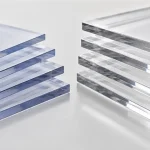
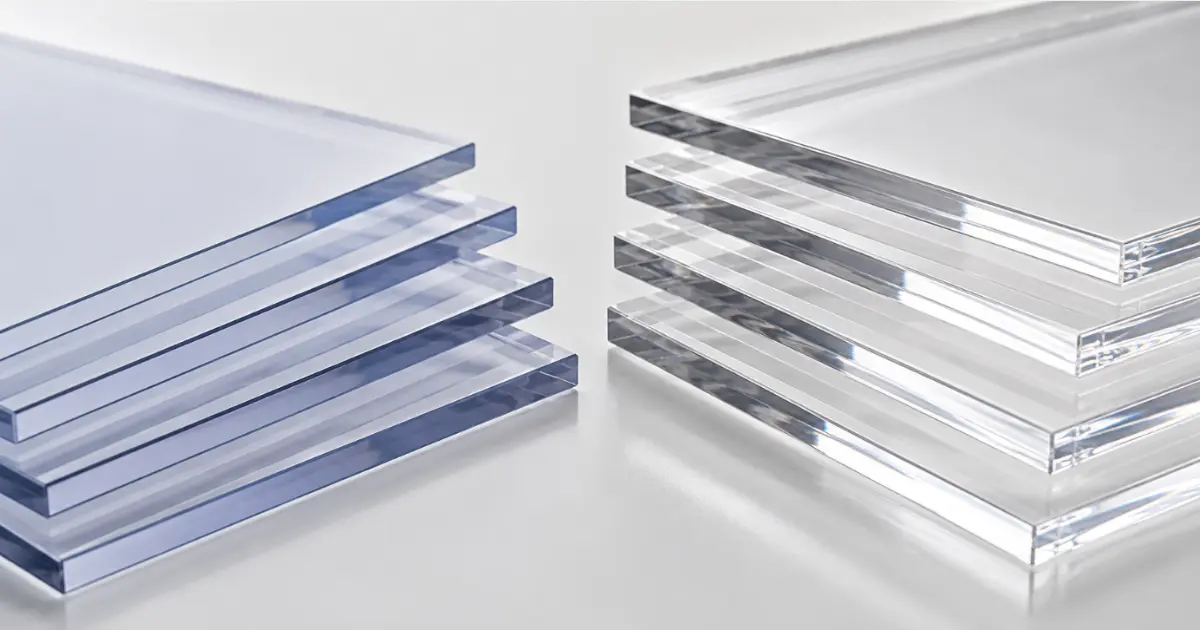
While both materials appear visually identical when new, their performance under real-world weather exposure, mechanical strain, and cost metrics diverges significantly. This guide examines key differences between Polycarbonate (PC) sheets and Acrylic (PMMA) sheets to help B2B buyers and OEM fabricators choose the optimal material.
Understanding the Core Polymers: PC vs. PMMA
Both materials offer exceptional clarity, yet they serve distinct engineering demands:
- Acrylic (Polymethyl Methacrylate / PMMA): Known for optical perfection, natural UV stability, and scratch resistance. Acrylic allows up to 92% light transmission, outperforming standard glass while weighing half as much.
- Polycarbonate (PC): Known for extreme impact toughness and shatterproof performance. PC is virtually indestructible, offering up to 250 times the impact resistance of glass.
Technical Comparison: Polycarbonate vs. Acrylic Sheets
Below is a comparative technical breakdown across key physical and economic performance parameters for outdoor display projects:
| Performance Metric | Polycarbonate (PC) Sheet | Acrylic (PMMA) Sheet |
|---|---|---|
| Light Transmission | ~88% – 89% | ~92% (Superior Clarity) |
| Impact Resistance | 250x Glass / 30x Acrylic (Virtually Unbreakable) | 10x to 17x Glass (Shatters under heavy force) |
| UV Resistance & Yellowing | Requires UV-stabilized co-extruded layer | Inherently UV Stable (No yellowing for 10+ yrs) |
| Scratch Resistance | Softer surface; easily scratched without hardcoat | Harder surface; superior scratch resistance |
| Continuous Temp Limit | Up to 120°C (248°F) | Up to 80°C (176°F) |
| Fabrication & Thermoforming | Easily cold-bent; excellent CNC routing | Polishes cleanly; ideal for heat-bending & laser cutting |
| Relative Cost | Higher Premium (~30-50% higher) | Cost-Effective / High ROI |
Key Decision Factors for Outdoor Displays
1. Optical Clarity and Visual Appeal
If your application prioritizes maximum transparency—such as high-end luxury retail displays, illuminated LED lightboxes, or museum sign cases—Acrylic (PMMA) takes the crown. It offers higher light transmission than glass and polished crystal-clear edges when flame or diamond-buffed[cite: 61].
2. Vandalism, High Winds, and Safety Concerns
For high-traffic public areas, bus stop shelters, stadium signage, or hurricane-prone environments, Polycarbonate is essential. Its unmatched fracture resistance prevents cracking from flying debris, rocks, or intentional vandalism[cite: 61].
3. Long-Term Weathering and Sun Exposure
Unprotected polymers yellow over time under harsh solar UV rays. PMMA is naturally resistant to ultraviolet light, ensuring outdoor displays remain clear for decades. Conversely, clear Polycarbonate specified for outdoor use must feature a UV-protected surface coating on one or both sides to prevent yellowing and loss of structural integrity.
4. Machining, Edge Polishing, and Custom OEM Cutting
Acrylic can be laser-cut with smooth edges and thermoformed into intricate curved shapes. Polycarbonate tends to burn or discolor under laser cutters but excels during cold-bending on-site or CNC routing into precise custom-cut dimensions[cite: 26, 62].
Direct Factory Sourcing & OEM Advantages in Vietnam
When procuring large volumes of clear plastic sheets for global projects, balance raw material costs against manufacturing precision and freight logistics[cite: 36, 52]. Manufacturing in Vietnam provides several competitive edges:
- Flexible OEM Customization: Sourcing cut-to-size extruded sheets directly from factory lines reduces material waste and secondary processing costs[cite: 23, 62].
- Cost-Effective Bulk Procurement: Vietnam OEM factories offer competitive pricing structures, helping cut material acquisition budgets[cite: 5, 52].
- International Shipping & Tariff Efficiency: Utilize strategic trade agreements and container packing optimization for lower landed costs[cite: 36, 59].
Frequently Asked Questions (FAQ)
Q1: Can clear Polycarbonate sheets be laser cut like Acrylic?
While Polycarbonate can technically be cut with specialized lasers, it often leaves a yellowed, burnt edge. CNC routing or mechanical sawing is recommended for precise, clean edges on PC sheets[cite: 26, 62].
Q2: How can I prevent scratch marks on clear outdoor display sheets?
Acrylic has a harder natural surface and resists scratching better than PC. For Polycarbonate displays exposed to abrasion, specify sheets with a factory-applied silicone or acrylic hardcoat layer.
Q3: Which sheet performs better under direct heat from high-wattage lighting?
Polycarbonate offers a higher heat deflection temperature (up to 120°C) compared to Acrylic (80°C), making it safer for high-intensity enclosed LED or halogen lighting assemblies.