Today we’re taking a deep dive into an amazing plastic material – unfilled polytetrafluoroethylene (PTFE). This material plays an integral role in our daily lives and has extremely special properties. So, what are the characteristics and advantages of unfilled PTFE? What is the scientific principle behind it?
First, let us understand the basic composition of PTFE. PTFE is a polymer polymerized from tetrafluoroethylene monomer. Its molecular structure has fluorine atoms replacing hydrogen atoms, which gives PTFE excellent heat resistance, cold resistance and excellent chemical stability. These properties allow PTFE to maintain stable performance under extremely harsh environmental conditions.
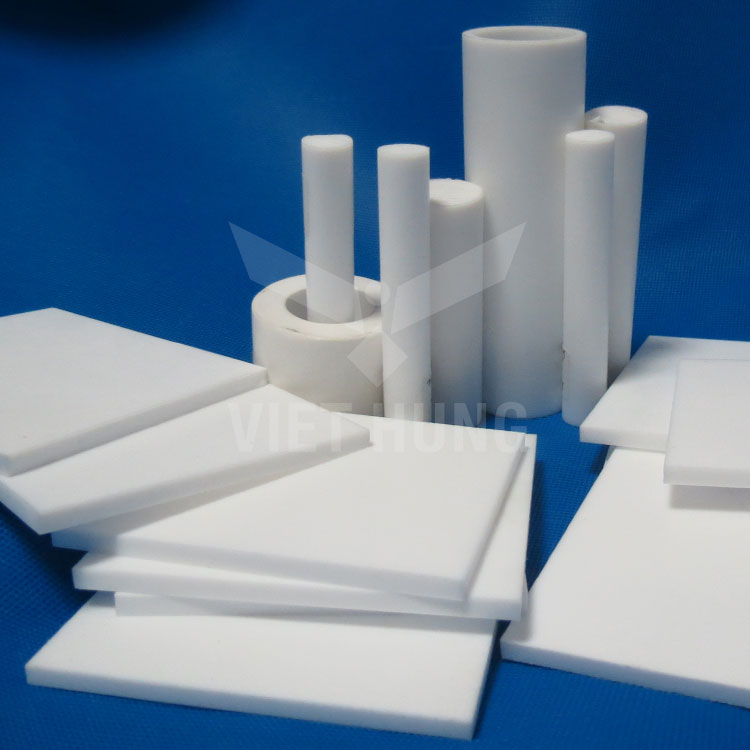
Unfilled PTFE refers to pure PTFE material without any fillers or reinforcements added. This material has many unique properties, the most prominent of which are low friction and self-lubrication. This is because the fluorine atoms in the PTFE molecular chain have excellent electronegative properties, making the surface of the PTFE material extremely resistant to adhesion and effectively resisting chemical corrosion even at extremely high or low temperatures. In addition, unfilled PTFE also has good processing properties and can be used for injection molding, extrusion, molding and other processing and molding operations.
So, why does unfilled PTFE have these special properties? This starts with the molecular structure of PTFE. The molecular chain of PTFE is composed of carbon atoms and fluorine atoms alternately arranged. This special arrangement gives PTFE extremely high molecular regularity and crystallinity. It is this highly regular molecular structure and crystallinity that gives PTFE its excellent mechanical properties and chemical stability. In addition, the electronegative nature of the PTFE material surface is also one of the key reasons for its low friction and self-lubricating properties.
Another important property of unfilled PTFE is its thermal stability. At high temperatures, ordinary plastic materials will gradually lose their original properties, but unfilled PTFE can maintain stable properties at extremely high temperatures. This property is attributed to the carbon-carbon bonds and carbon-fluorine bonds in the PTFE molecular chain. At high temperatures, the carbon-fluorine bond rotates, making the PTFE molecular chain more flexible and fluid, thus improving its thermal stability.
In addition to its excellent performance, unfilled PTFE also has a wide range of applications. For example, in the automotive industry, unfilled PTFE is widely used to manufacture seals, bearings, pipes and other components. In the chemical industry, unfilled PTFE is also widely used in the manufacture of valves, pipes, containers and other equipment. In addition, unfilled PTFE is also widely used in electronics, medical, aerospace and other fields.
In summary, unfilled PTFE is a plastic material with excellent properties and wide applications. Its unique molecular structure and surface properties give it many advantages such as low friction, self-lubrication, thermal stability and chemical stability. With the continuous development of science and technology, it is believed that unfilled PTFE will have wider application prospects in the future. Let us look forward to the innovation and changes brought about by this magical material!